
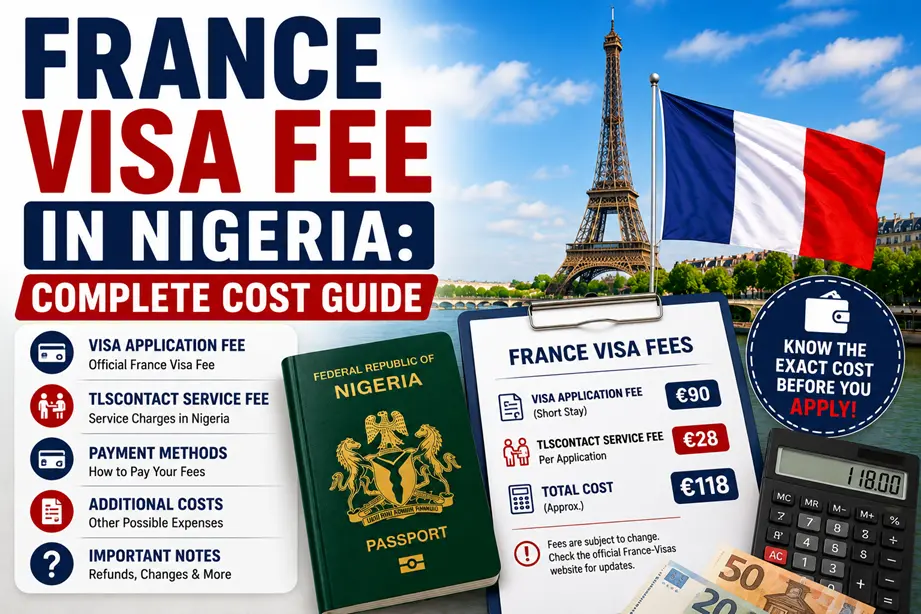
The visa fee is one of those things most applicants want to know before doing anything else. After all, there is little point planning your documents and appointment without knowing what the application will cost. For Nigerians applying for a standard short-stay visa to France, the main visa application fee is currently €90. There is also a separate €28 TLScontact service fee for applications submitted through the visa application center in Nigeria. That means the amount you should budget for your application is more than simply converting €90 to naira. This guide breaks down the France visa fee in Nigeria, what you are actually paying for, additional costs to expect and which applicants may qualify for reduced or waived fees. If you are looking for the complete process, see our guide to France Visa from Nigeria: Complete Guide.
How Much Is the France Visa Fee in Nigeria?
For a standard short-stay Schengen visa, the current French visa application fee is €90. This applies to the standard short-stay visa category, which covers many common trips such as tourism, visiting family or friends and certain business visits of up to 90 days. France-Visas confirms that the standard short-stay visa fee is €90. The naira amount is not fixed permanently because the payment is made in local currency using the exchange rate applicable to the French visa process. Therefore, you should not rely on an old naira figure you found in an article or social media post.
France Visa Fee in Nigerian Naira
Although applicants naturally want to know the exact naira amount, it is better to think of the fee as €90 converted into the applicable local-currency amount. Based on the current exchange rate at the time of writing, €90 is approximately ₦136,400. This is an estimated naira equivalent and may change as exchange rates change. The France-Visas Nigeria page states that the visa application fee is paid in local currency by card through TLScontact. Therefore, the actual amount you pay may differ from the figure above depending on the exchange rate applicable at the time of payment. This is also why we would not recommend transferring a fixed naira amount to someone simply because they tell you it is “the France visa fee.”
There Is Also a TLScontact Service Fee
This is where some applicants get caught out. The €90 visa application fee is not the only mandatory application-related charge. TLScontact, the external service provider receiving France visa applications in Nigeria, currently charges a €28 service fee. France-Visas states that this fee is payable online according to the French official exchange rate. The service fee covers services associated with receiving the application, processing data, collecting information and managing appointments. So, for a normal short-stay application, you should think about the cost this way:
| Cost | Current amount |
| France short-stay visa fee | €90 |
| TLScontact service fee | €28 |
| Basic application-related total | €118 |
The actual naira amount will depend on the applicable exchange rate and payment arrangements.
Is the TLScontact Fee Part of the Visa Fee?
No. They are separate charges. The €90 is the visa application fee paid for the French administration to process your visa application. The €28 is the TLScontact service fee for the services provided by the application center. This distinction is important because paying the TLScontact fee does not mean you have paid the French visa fee.
Are There Reduced France Visa Fees?
Yes. Some categories of applicants may qualify for a reduced fee or exemption. The official France-Visas fee schedule lists a €45 reduced rate for children between 6 and 12 years old for the standard Schengen visa. Children under six are exempt from the visa fee. Certain other categories may also qualify for an exemption under the applicable rules. Do not assume that a child automatically receives a reduced fee simply because they are under 18. The applicable age category matters.
Who May Be Exempt From the Visa Fee?
There are specific situations where applicants may not have to pay the standard visa fee. According to France-Visas, examples include children under six and certain family members of French nationals or nationals of EU/EEA countries or Switzerland, subject to the relevant conditions. There are also special provisions for certain categories of applicants. If you believe you qualify for an exemption, check your specific circumstances through France-Visas rather than simply assuming you are exempt.
Is the France Visa Fee Refundable?
No. This is one of the most important things to understand before paying. The French authorities state that visa fees are not refunded, including when an application is refused or the applicant withdraws the application. In other words, paying the fee does not mean you are paying for a successful visa. You are paying for the administrative processing of the application. This is why it makes sense to prepare your application properly before submission.
What Other Costs Should You Budget For?
Your visa fee is only one part of the money you may spend while preparing your application. Depending on your circumstances, you may also need to pay for:
- Travel insurance: Your Schengen application requires appropriate medical travel insurance.
- Passport photographs: You may need new photographs that meet the applicable specifications.
- Printing and photocopying: France-Visas requires applicants to bring the necessary original documents and copies to their appointment.
- Transportation: If you are traveling to a TLScontact center in Lagos or Abuja, you should include transportation in your budget.
- Optional TLScontact services: TLScontact offers additional paid services such as photography, photocopying, assistance with completing the online form and courier return of passports. These are optional and are separate from the standard visa and service fees.
Can Someone Guarantee Your Visa After Payment?
No legitimate person can guarantee that your French visa will be approved simply because you have paid the required fees. The French consular authorities make the visa decision. TLScontact receives applications and provides related services, but it does not decide whether you receive a visa. France-Visas also warns applicants not to accept requests from intermediaries or service providers around the TLScontact buildings. Be particularly careful if someone claims they can “influence” the embassy because you paid them an extra amount.
Does Paying the Fee Increase Your Chances of Approval?
No. The fee has nothing to do with the strength of your application. Your documents, travel purpose, financial circumstances and overall eligibility are what matter when the application is assessed. A person who pays €90 does not have a better chance of approval than another applicant simply because they paid the same fee.
When Should You Pay?
The payment arrangements depend on the stage of the application and the fee involved. For applications in Nigeria, the TLScontact appointment requires prepayment of the TLS service fee, while the visa application fee is collected by TLScontact on behalf of the French administration. The France-Visas Nigeria page states that the visa fee must be paid in local currency by card. Follow the payment instructions presented during your application rather than relying on an unofficial payment method.
Frequently Asked Questions
How much is the France visa fee in Nigeria?
The standard short-stay France Schengen visa fee is currently €90. Applicants in Nigeria also pay a separate €28 TLScontact service fee.
How much is the France visa fee in naira?
The €90 visa fee is approximately ₦136,800 based on the current exchange rate at the time of writing. The naira equivalent may change as exchange rates change.
How much is the TLScontact fee in Nigeria?
The current TLScontact service fee for France visa applications in Nigeria is €28, payable online according to the French official exchange rate.
Is the France visa fee refundable if I am refused?
No. France-Visas states that visa fees are not refunded in cases of refusal or withdrawal.
Do children pay the full France visa fee?
Children aged 6 to 12 may qualify for the reduced €45 rate for a standard Schengen visa, while children under six are generally exempt from the visa fee. Other exemptions can apply to specific categories.
Are TLScontact optional services compulsory?
No. Services such as photography, photocopying, courier delivery and form-filling assistance are optional paid services.
Conclusion
The France visa fee in Nigeria is relatively straightforward once you separate the different charges. For a standard short-stay application, the French visa fee is €90, while TLScontact currently charges an additional €28 service fee. Beyond these charges, remember to budget for travel insurance, document preparation, transportation and any optional services you choose. Most importantly, don’t confuse payment with approval. The fee covers the processing of your application, while the final decision rests with the French consular authorities.